A Short Walk Through a Wide World
by Douglas Westerbeke
A Promising Journey that Meanders with No Destination
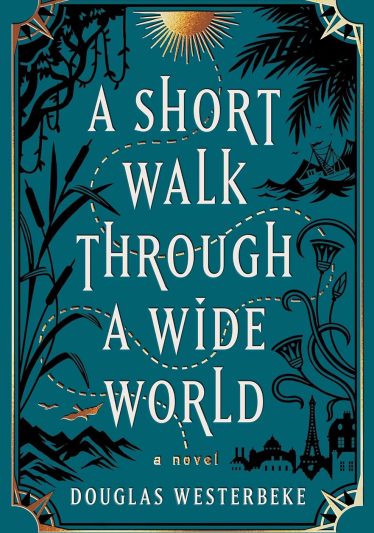
Title:
Author:
Genre:
Page Count:
Release Date:
Enjoyment:
Writing:
Characters:
Plot:
Readability:
Setting:
A Short Walk Through a Wide World
Douglas Westerbeke
Historical Fiction; Fantasy-ish
390
April 2, 2024
♥ ♥
♥ ♥
♥
♥
♥ ♥
♥ ♥
The Quick Look
Marketed as a novel for fans of The Invisible Life of Addie LaRue, this debut promised a sweeping, fantastical journey around the world. What it delivered, for me, was a story with potential—but no pulse.
- Themes: (According to the publisher) The cost of immortality, the weight of wandering, and what makes a life worth living.
- Read If You Like: Stories of eternal life, nomadic adventure, and quiet philosophical introspection (but with a higher tolerance for plotlessness than I had).
- Best for: Readers who love reflective, meandering tales and don’t need tight plot structure.
- Skip if: You crave character-driven stories with narrative payoff and emotional resonance.
The Full Review
PLOT & PACING:
The novel follows Aubry Tourvel, a girl cursed to keep moving—unable to stay in one place longer than a few days without dying of a mysterious illness. On paper, it’s a fascinating premise. In execution, it felt like watching a series of disconnected postcards flip by. There was little cause and effect, no clear stakes, and no satisfying arc—just “and then… and then… and then.”
CHARACTER & VOICE:
Aubry, the central character, never really came alive for me. Because the novel is told in third person and spans decades, it’s hard to feel truly tethered to her emotionally. I couldn’t shake the feeling that I was watching her from a distance, rather than walking beside her.
STYLE & ATMOSPHERE:
There are some lovely passages here and there, but overall the prose didn’t elevate the story enough to hold my attention. I paused the book around the 100-page mark, only returning months later to finish it on audio—and even then, I struggled to connect.
THEMES & DEPTH:
Westerbeke’s novel attempts to explore ideas like fate, isolation, and the search for meaning—but without a strong emotional or narrative throughline, these themes feel abstract rather than earned. Without clear consequences or evolution, it’s hard to feel what any of it means.
PERSONAL TAKE:
I wanted to love this. Truly. I picked it up because of the Addie LaRue comparison, and if you’ve been following along, you know how much that book means to me. But this wasn’t it. It’s not that the premise didn’t have potential—it’s that the storytelling never followed through in a satisfying way. Still, I respect the ambition and the effort of a debut author stepping into such big narrative shoes.
The Final Verdict
Wistful, wandering, and ultimately lacking the emotional and narrative spark that could have made it great. A beautiful idea that didn’t quite come together for me.